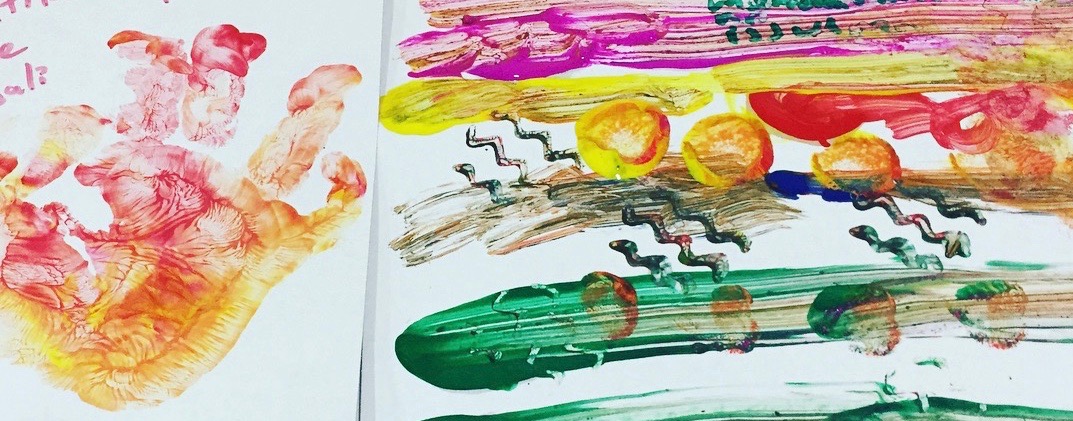
Art Therapy is similar to talking therapy and is practiced by professionals trained in psychotherapy. The difference being that in Art therapy art is the main form of communication.
Art therapy is accessible to anyone and you do not need any creative skills to benefit from it. It can be used for similar reasons to other therapies to help improve your emotional wellbeing and mental health.
In art therapy you will be guided to explore your inner emotions through art making. You will be able to set goals and have regular reviews with your therapist to achieve these.
Private Practice
I make use of the art therapy room at Creative works near Blackhorse road station please see pictures bellow, I can also meet clients in the community if necessary. I currently have availability on Monday mornings.


For enquiries please email suryadewit@outloook.com
Painting Together at the Grow Well Centre
Art Therapy Group for Parent-Child dyadic intervention focused on the early years and those who might experience Adverse Childhood experiences. This 6-week closed creative therapy group is specifically designed for parents and their infants or children. It offers a therapeutic space where parents and children can explore and strengthen their attachment relationships in a supportive, nurturing environment. Through none directive art therapy parents and children are invited to connect on a deeper emotional level, fostering mutual understanding and healing.
The focus of this group is on the emotional bonds between parent and child. Participants will be encouraged to express themselves creatively, either collaboratively or side by side, using art as a tool to communicate and explore their feelings. This creative process provides a unique opportunity for non-verbal expression and can help break down communication barriers, particularly in cases where words might be difficult to find.
Two experienced facilitators will lead the group, providing a safe, supportive space for parents and children to express their emotions and experiences. The facilitators will guide participants through therapeutic processes, encouraging exploration of attachment dynamics, emotional connection, and the healing potential of relationships. By examining the parent-child bond in a creative context, the group aims to foster a deeper sense of empathy, trust, and emotional resilience.
 Surya de Wit - Fine Artist and Art Psychotherapist